Matt Black
Entrepreneur, independent researcher and author.
Twelve ventures. More than 300 investments. Five books on acting under uncertainty.
The divide opening in the AI age is between those who can act under uncertainty and those who can only be acted on by it.
What changed, and what didn't
Most people who know me know one of the versions. Investor. Serial founder. Sometimes the man on the stage.
Fewer know about the mentoring, or the writing, or the causes I've quietly put money and time into for twenty years.
Almost nobody knows that for the last two years I have written code and research most days. On AI, and specifically on where it meets people — who holds the context, who keeps the authority, who is answerable when the machine is confident and wrong.
I didn't announce it. I was working.
Twelve companies across three continents is enough for more than one lifetime. I've built my last one. That part is finished, and I'm not mourning it.
What isn't finished is the reason I built them. I started companies because something was broken and nobody was fixing it. That impulse hasn't moved an inch in forty years. What's moved is the leverage. I've backed more than three hundred founders. One of them, given the right idea and forty years of scar tissue behind it, goes further in five years than I would go myself in fifteen.
So I'm stepping out of the chair and standing behind it. Same drive. Different seat.
Not any one of them
People keep asking which one I am now.
I have a degree in graphic design. I'm not a designer. I paint abstract work I'm proud of and I've never called myself an artist. I once announced I was becoming a professional speaker — and I'm a considerably better speaker now than I was then, having stopped saying it.
None of those went anywhere. Nothing gets traded in. A new skill becomes dominant for a while, gets explored properly, and then sits down with the others and stays available.
So the honest answer is that I'm not any one of them. I'm all of them, and that turns out to be the job rather than a failure to pick.
Because here is what I've actually been doing, without noticing it for most of my life. In the nineties I built a telecoms company that stopped reselling other people's plans and wrote its own — a layer between the carriers and the customer that hadn't existed. Now I work on where authority sits between people and machines. And on finding the territory where a business becomes possible before anyone agrees it is.
Same move. Three times. Thirty years apart.
You can only make that move if you can hold several fields at once and see where they don't meet. That's what all the apparently unrelated skills were for.
How I work
Written for myself, years before any of it became a method I published.
Leave things better than I found them.
Possibility matters. Agency matters.
Most situations contain more possibility than appears at first glance.
Problems can become value.
Constraints can create invention.
Barriers can become traction.
What appears impossible is often simply something for which the route has not yet been found.
Touch reality early.
Ideas become valuable when they encounter the world.
Build something.
Say something.
Ask someone.
Run the experiment.
See what comes back.
Do not protect an idea indefinitely by keeping it perfect and imaginary.
Makeexposeobservelearnadaptrepeat
Transform rather than merely tolerate.
- problem possibility
- constraint design
- barrier traction
- knowledge action
- complexity something usable
Build agency, including my own.
Systems over dependence.
Capability over rescue.
Understanding over instruction.
Ownership over helplessness.
Givers gain.
Help people when you genuinely can, without keeping score or demanding immediate reward. But giving should create agency, not dependence.
The work
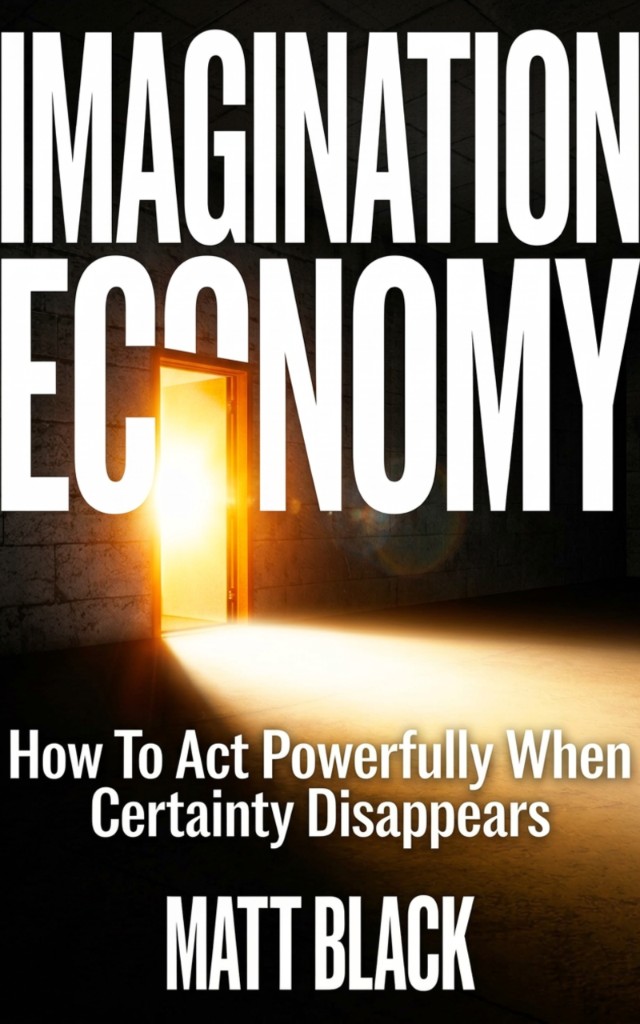
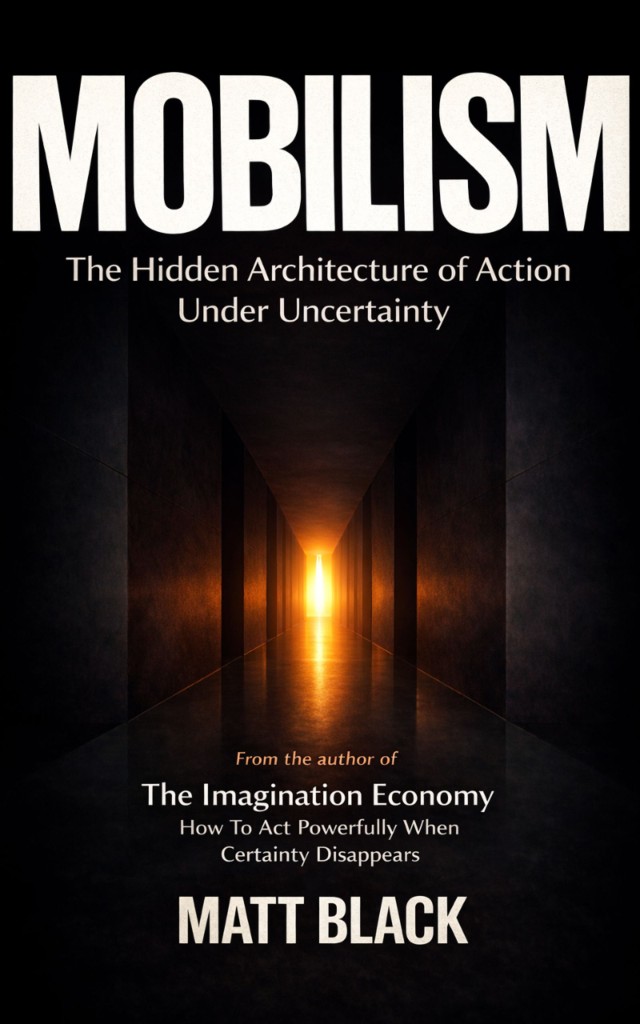
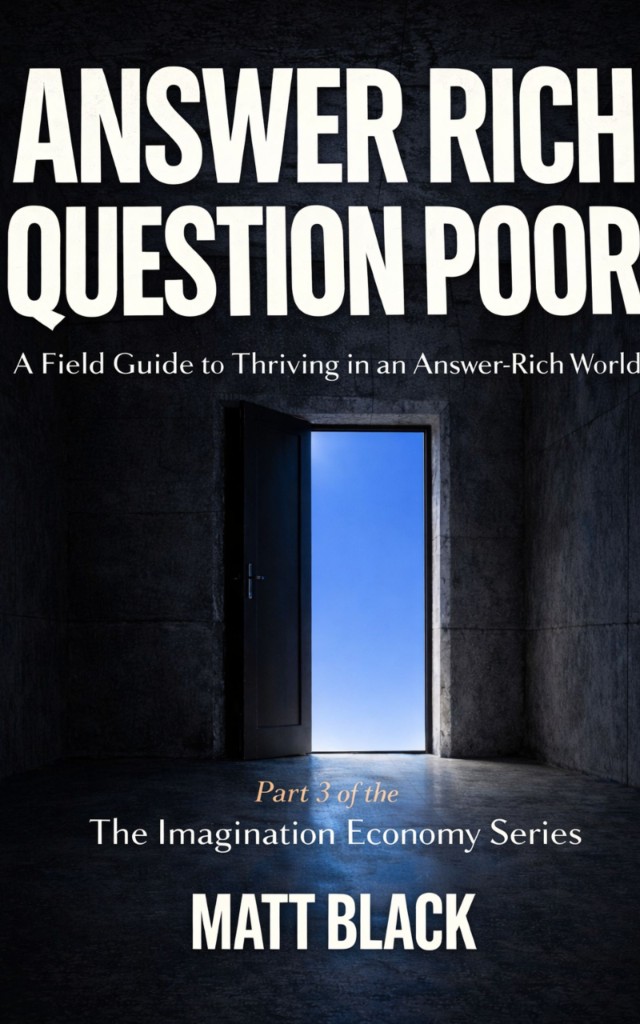
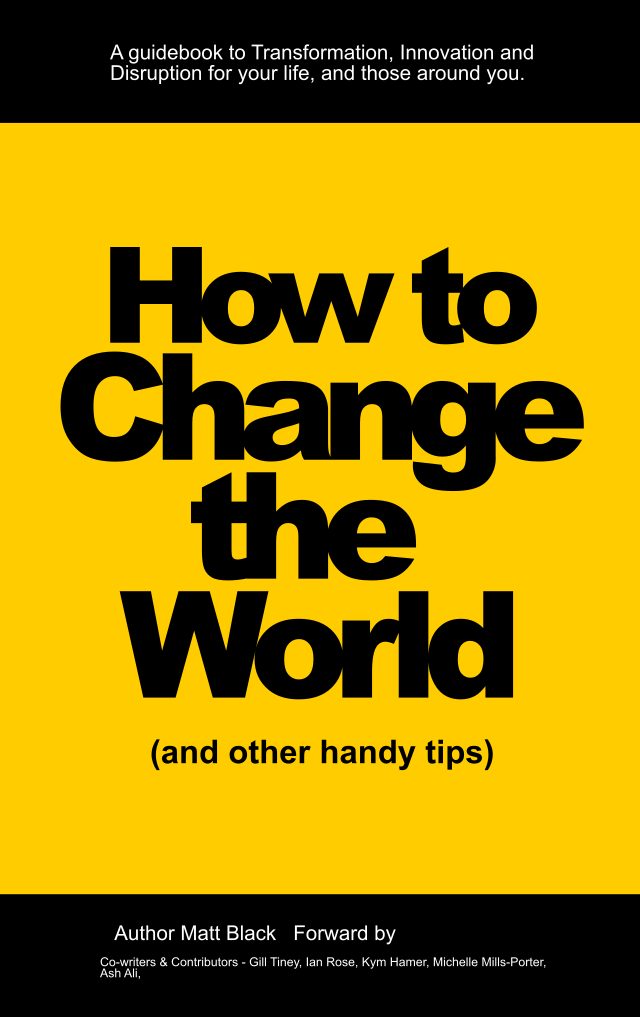
Books. The Imagination Economy (2026) and Mobilism: The Hidden Architecture of Action Under Uncertainty (2026), with Answer Rich, Question Poor to follow. One series, on what changes as intelligence becomes abundant.
Research. Independent, published openly, including the tests that fail. Current work covers verification and governed autonomy, where authority sits between people and machines, and how founders act before feasibility arrives.
Rooms. Google Campus · Microsoft · Imperial College London · Virgin · Travers Smith · Chelsea FC · WeWork · Hult · Greenwich · Westminster. Board of Gateway 2 Enterprise. Twice a judge at family office and HNWI pitch events. Paid advisory in Mexico City, Switzerland and Algeria.
Press. Sky News · The Chrissy B Show · editor and columnist, Disrupts Magazine.
What I'm looking for now
I'm not looking for more companies to start. I'm looking for people already running something that works, where the missing piece isn't effort.
What I bring is forty years of pattern recognition, a network built over three decades, and a body of intellectual property I would rather see used than filed.
If that's you, tell me what the missing piece is.